
Quick Summary
Bathroom wall tiles can collect soap scum, mineral spots, mildew, and everyday residue faster than many Denver homeowners expect. A solid cleaning routine starts with the right products, gentle tools, and consistent moisture control. Knowing how to clean wall tiles in bathroom spaces also helps protect grout, reduce odors, and keep the room feeling fresher between deeper home cleanings.
Many Denver bathrooms deal with a mix of dry air, seasonal temperature changes, and hard water buildup. That can leave shower walls looking dull, streaky, or chalky, even when you clean often.
Good tile care does not have to feel complicated, though. With a few simple habits, you can keep bathroom walls brighter and make deep cleaning less stressful.
Start With a Gentle Surface Reset
Clean tile starts with removing loose dust, hair, and surface debris before applying any cleaner. This step helps your cleaning solution work more effectively since it does not have to cut through dry buildup first. A microfiber cloth, soft sponge, or dry towel works well for a quick wipe-down.
Follow with a light rinse using warm water. Warm water helps loosen soap residue and softens stuck-on film. Homes in Denver with hard water may still show white spots after rinsing, so the surface may not look fully clean right away. Those mineral marks usually need extra attention.
Once the surface is damp, apply a mild bathroom cleaner or a simple tile-safe mixture. Let it sit briefly, but do not let it dry on the wall. A short dwell time helps break down grime without heavy scrubbing. This matters because aggressive scrubbing can dull tile finishes or wear down grout over time.
Focus On Soap Scum Before It Hardens
Soap scum is one of the main reasons bathroom wall tiles lose their shine. It forms when soap, body oils, shampoo, and minerals combine on damp surfaces. Over time, this residue turns into a cloudy layer that feels sticky or rough.
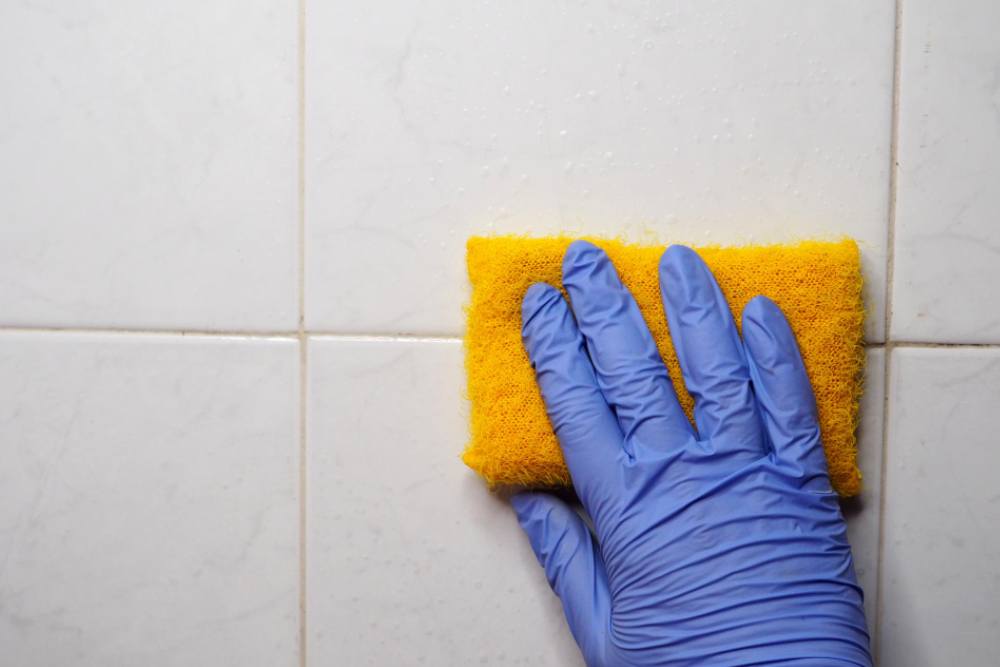
For regular cleaning, use a non-abrasive sponge and work in small sections. Circular motions can help loosen film without leaving streaks across glossy tile. After wiping, rinse the wall well with clean water. Any leftover cleaner can dry into another layer of residue, which makes the tile look dull again.
Tougher soap scum may need a tile-safe cleaner with a longer soak time. It is better to repeat a gentle process than to scrape the wall with harsh tools. Metal scrubbers, stiff brushes, and rough pads can scratch tile glaze or damage decorative finishes. A softer method leads to better long-term results when learning how to clean wall tiles in bathroom areas.
Give Grout Lines Extra Attention
Grout tends to hold moisture, dirt, and discoloration more than tile. Since grout sits slightly below the tile surface, residue often settles into those lines after showers and baths. A wall can still look dirty even when the tiles look clean.
Use a soft brush to clean grout lines with controlled pressure. A toothbrush-style brush works well for corners, edges, and tight spaces around fixtures. Move slowly so the cleaner has time to break down the buildup. Rushing often leaves behind dark spots that return quickly.
After scrubbing, rinse carefully and dry with a clean towel. Drying matters because damp grout can lead to musty smells and mildew stains. Denver’s dry climate can help moisture evaporate faster, but enclosed bathrooms can still trap steam after hot showers. Good airflow makes a noticeable difference.
Manage Moisture After Every Shower
Daily moisture control is one of the easiest ways to keep bathroom wall tile cleaner. After a shower, water droplets carry soap, minerals, and body oils down the wall. When they dry, they leave streaks and spots.
A small squeegee can remove water from tile in under a minute. Wipe high-splash areas with a towel, especially near the showerhead, corners, and lower wall sections. These simple habits limit buildup before it turns into a larger cleaning task.
Run the bathroom fan after showers and keep the door open when possible. Moving damp air out of the room helps the walls dry faster. Drier surfaces slow mildew growth, protect grout, and keep the space smelling fresher between deeper cleanings.
Use the Right Cleaner for the Tile Type
Different tile materials react differently to cleaning products. Ceramic and porcelain usually handle mild bathroom cleaners well, while natural stone needs a gentler solution made for stone surfaces. Strong acidic cleaners can leave marks on marble, travertine, or other porous materials, so checking the tile type matters.
For a simple routine, spray the cleaner evenly and wipe from top to bottom. This prevents dirty water from dripping over areas you have already cleaned. Rinse with warm water and dry with a clean towel. A dry finish helps reduce streaking and keeps mineral spots from settling back onto the surface. This approach reinforces how to clean wall tiles in bathroom spaces without causing damage.
Keep Corners, Fixtures, and Edges From Building Up
Corners and edges often collect the most grime because water sits there longer. Shampoo splashes, soap residue, and moisture can gather around shower shelves, faucet plates, and caulk lines. These areas may look small, but they can make the whole bathroom feel less fresh.
Use a soft cloth around fixtures and a small brush near corners. Be gentle around caulk because rough scrubbing can pull it loose or create gaps. After cleaning, look for dark spots, peeling caulk, or areas that stay damp. Those signs may mean the bathroom needs deeper attention than a quick wipe-down.
How DCSC Can Help With Bathroom Tile Cleaning
Busy schedules can make bathroom cleaning easy to delay. That is especially true when tile walls, grout, and shower corners need more than a fast surface wipe. At Denver Cleaning Service Company, we help homeowners keep bathrooms cleaner with friendly, detailed home cleaning services that fit real life.
Our team can help with regular home cleaning, deep cleaning, move-out cleaning, and post-construction cleaning. Move-out and post-construction jobs are especially helpful when bathroom tile has dust, residue, soap film, or buildup from heavy use. We focus on the areas people notice most, while still paying attention to the smaller spots that often get missed.
Keep Your Denver Bathroom Feeling Fresh
Cleaner bathroom wall tiles can make the whole room feel brighter, fresher, and easier to maintain. A simple routine helps reduce soap scum, hard water marks, and grout discoloration before they become harder to remove. For deeper bathroom cleaning or help before a move, at Denver Cleaning Service Company, we’re ready to make the process easier. Call us today to schedule your home cleaning.
FAQs
Weekly cleaning works well for most homes. Bathrooms with frequent showers, poor airflow, or hard water may need touch-ups more often.
Yes, many hard water spots can be reduced with the right tile-safe cleaner and steady wiping. Older buildup may need deeper cleaning.
Yes. Grout needs a soft brush, light pressure, and careful rinsing because it holds moisture and residue more easily.
Recent Comments