
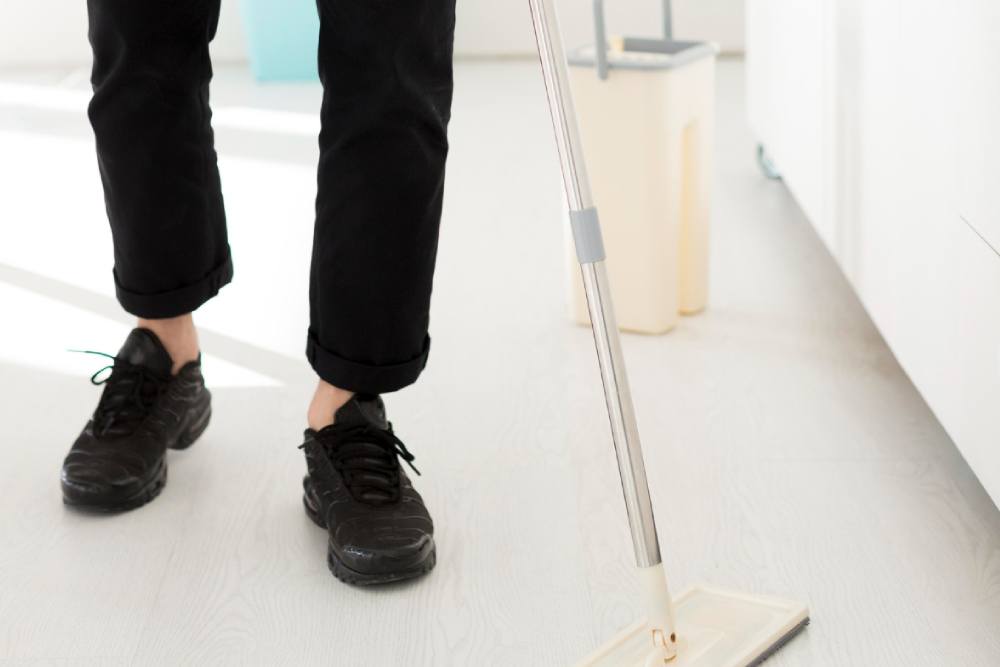
Kitchen floors collect crumbs and sticky spills throughout the day which makes regular maintenance a top priority. A clean space starts with a clear plan for how often to mop kitchen floor to stop grime.
Daily sweeping removes loose dirt while a weekly wet mop tackles tougher stains effectively. Many households choose residential cleaning services to handle these chores because professional tools reach every hidden corner.
Signs Your Kitchen Floor Needs Mopping Now
Certain visible and sensory cues indicate when mopping should not be delayed. Paying attention to these signs helps maintain cleanliness and prevent long-term buildup.
- Sticky Residue: Spills from drinks or sauces often leave a tacky layer that quickly attracts dirt and dust. This buildup creates visible marks and a rough texture underfoot. A damp mop restores a smooth, clean surface and helps reduce pest attraction.
- Cloudy Appearance: Floors that lose their shine often have a thin layer of dust or film on the surface. This dulling effect makes the kitchen look less clean even when it is only lightly soiled. Mopping restores clarity and natural brightness.
- Dirty Grout Lines: Darkened grout lines between tiles indicate trapped dirt that sweeping alone cannot remove. Moisture and cleaning solution help lift debris from these areas and restore a cleaner appearance.
- Footprints: Visible shoe or barefoot marks often appear in well-lit areas of the kitchen. These smudges build up over time and may create slippery spots if not cleaned regularly.
- Odors: Lingering smells can develop when food particles remain on the floor surface or in small cracks. A proper mop with warm water and cleaning solution helps eliminate odor-causing bacteria.
- Pet Tracks: Pets frequently bring in dirt, mud, and outdoor debris that spread across kitchen flooring. Regular mopping helps reduce bacteria and keeps shared spaces more hygienic.
Daily Vs Weekly Mopping for Kitchens
Daily mopping focuses on keeping the most frequently used areas of the kitchen free from crumbs, light spills, and surface grime. High-traffic cooking spaces tend to accumulate dirt quickly throughout the day, especially near the sink, stove, and preparation areas. A quick wipe-down helps prevent buildup from becoming sticky or harder to remove, keeping the floor presentable and more comfortable for everyday use.
Weekly mopping goes deeper and covers the entire kitchen floor from wall to wall. This type of cleaning targets residue that builds up over time in corners, under appliances, and along edges where daily quick cleaning may not reach.
A full weekly session helps restore the overall appearance of the floor, removes embedded dirt, and maintains a more consistent level of cleanliness throughout the space.
Mopping After Every Meal Prep Session
Cooking often drops grease or water onto the floor which creates a slip hazard for the cook. Flour and spices also float down and settle into the cracks of the floorboards or tiles. A fast mop after the dishes are done keeps the floor from feeling gritty underfoot.
High Traffic Kitchen Zones Need More Mopping
Certain areas of the kitchen experience more activity than others and tend to collect dirt faster. The space around the sink, stove, and refrigerator often requires more frequent attention due to water splashes, oil drips, and constant movement.
Focusing on these zones can improve efficiency when determining how often to mop kitchen floor, since targeted cleaning reduces the need for constant full-floor scrubbing. This approach helps maintain cleanliness without unnecessary effort across less-used areas.
Spills and Splatters Require Immediate Floor Cleaning
Kitchen spills like milk, soup, or cooking oil should be cleaned immediately because they quickly soak into flooring and can lead to lasting damage.
When liquids are left unattended, they often spread into seams, edges, and baseboards where moisture can become trapped. This trapped moisture creates an environment where mold and odors develop over time, which becomes more difficult to remove later.
Prompt cleanup also helps preserve flooring materials that are sensitive to staining or water damage. Even a short delay allows sticky residues to settle and attract more dirt, turning a small spill into a larger cleaning problem. Quick action keeps the kitchen sanitary and reduces the effort required for deep cleaning later.
Seasonal Impact on Kitchen Floor Cleaning Needs
Weather changes directly affect how quickly kitchen floors become dirty. During rainy or snowy seasons, mud, salt, and moisture are often tracked indoors, especially through entryways connected to the kitchen. These materials can scratch flooring surfaces and leave visible residue that dulls the appearance of the room.
More frequent mopping during these seasons helps protect floor finishes and prevents long-term wear. Removing grit and moisture regularly reduces the risk of surface damage and helps maintain the original condition of wood, tile, or laminate flooring.
Moisture Control and Long-Term Floor Protection
Excess moisture is one of the most common causes of flooring damage, particularly on wood surfaces. When too much water is used during cleaning, planks may swell, warp, or lose structural integrity over time. Using a lightly damp mop instead of saturated cleaning tools helps prevent this type of damage.
Tile floors are more resistant to water exposure, but grout lines remain vulnerable if moisture is left to sit for extended periods. Proper drying and controlled mopping techniques help extend the lifespan of flooring materials and reduce the likelihood of costly repairs in the future.
Safe Cleaning Solutions for Regular Use
A simple vinegar and warm water mixture is commonly used for routine mopping because it effectively removes grease and grime without harsh chemicals. This solution is suitable for most hard surfaces and helps break down residue while leaving minimal streaking behind.
The natural acidity in vinegar also helps dissolve mineral deposits caused by hard water, which improves overall floor appearance. This method is cost-effective and widely used for maintaining a clean, bright kitchen surface on a regular basis.
Professional Cleaning Standards and Frequency
In commercial kitchens, floors are cleaned multiple times throughout the day to meet strict hygiene requirements. Frequent mopping prevents slips, reduces contamination risks, and maintains a safe food preparation environment.
While residential kitchens do not require the same level of frequency, this standard highlights the importance of consistent cleaning habits. Regular mopping remains one of the most effective ways to maintain a safe and sanitary home kitchen.
Weekly Deep Cleaning for Thorough Maintenance
A weekly deep mop goes beyond surface cleaning by reaching areas that are often missed during daily maintenance. Moving furniture, rugs, and appliances allows full access to corners and hidden spots where dust and debris accumulate.
Using fresh cleaning tools and warm soapy water helps remove deeper layers of grime that build up over time. This type of cleaning restores the kitchen floor’s appearance and maintains a well-kept, polished finish.
Call Denver Cleaning Service Company Today to Get Your Kitchen Floors Sparkling Like New
Our team brings a fresh sparkle to every home we visit in the local area. DCSC provides top quality care because we focus on the details that make a house feel special. We love meeting new neighbors and helping them save time on chores.
Our Denver house cleaning experts arrive with the best tools to tackle any mess on your floors. We specialize in residential jobs like move out cleans that need an extra touch of perfection. Denver Cleaning Service Company keeps things friendly and professional while we work hard for you.
Let us handle the dirt so you can focus on your busy life.
Recent Comments