
Quick Summary
RTD sensors are valued for stable and accurate temperature readings, but their performance depends on selecting the correct range for the application. RTD temperature ranges help define how well a sensor handles heat, cold, vibration, response speed, and long-term use. Choosing the right RTD also involves considering materials, wiring style, probe design, and operating conditions.
A kitchen deep cleaning checklist is helpful because kitchens collect mess in so many different places. Grease can settle on cabinet doors, crumbs can hide near appliances, and spills can leave sticky spots in drawers or pantry shelves. For many Denver homes, the kitchen is where busy mornings, family meals, work lunches, and weekend gatherings all happen.
That kind of daily use adds up quickly. Regular cleaning helps, but deeper cleaning gives the room a better reset. At DCSC, we understand how a clean kitchen can improve the feel of the entire home, especially before moving, after remodeling, or during busy seasons when cleaning gets pushed aside. A well-structured kitchen deep cleaning checklist makes the process more manageable and consistent.
Start With a Clear Kitchen Reset
Before scrubbing begins, clearing the space makes the entire process easier. Remove dishes from the sink, take out trash, put away food, and move small items off countertops. This creates space to work and makes it easier to spot areas that are often missed in a standard clean. A kitchen deep cleaning checklist often begins with this reset step to improve efficiency.
Next, scan the kitchen from top to bottom. Dust and debris fall during cleaning, so starting high helps avoid re-cleaning surfaces. Light fixtures, cabinet tops, vent hoods, and upper shelving should be handled before moving down to counters, drawers, and floors.
This is also a good moment to remove clutter that does not belong in the kitchen. Mail, bags, containers, and miscellaneous items can slow down cleaning and reduce access to surfaces. Once the space feels open, the real deep cleaning becomes much more manageable.
Clean Appliances Inside and Out
Appliances work hard every day, so they require detailed attention during deep cleaning. Refrigerators often collect spills, crumbs, expired food, and sticky residue. Empty shelves and drawers, wipe all surfaces, and clean door seals where buildup tends to accumulate. A kitchen deep cleaning checklist usually places refrigerator cleaning early because it takes time and organization.
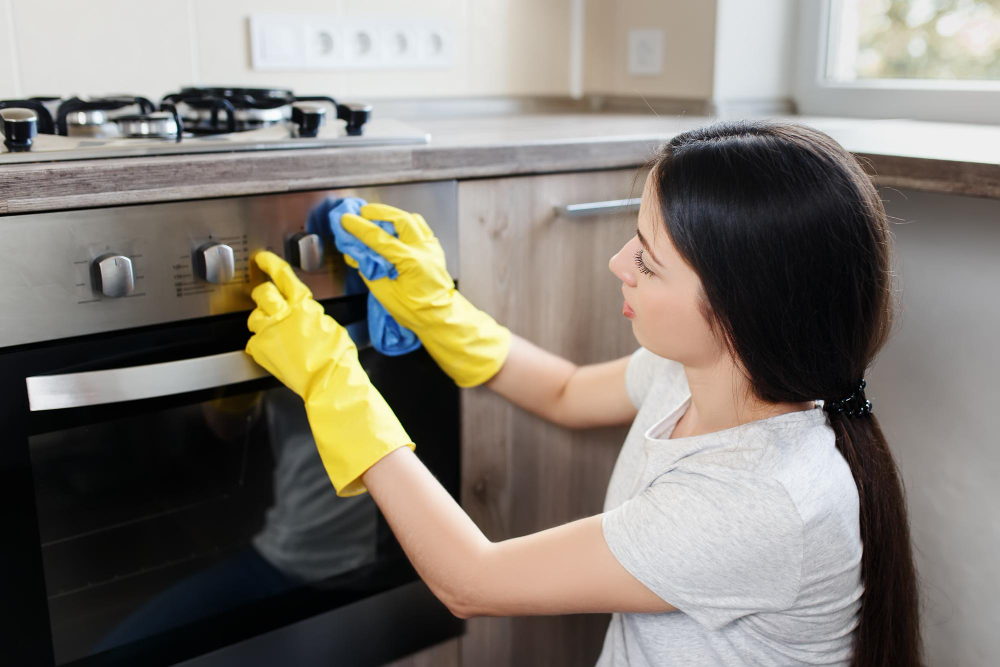
Ovens and stovetops often need extra effort due to baked-on grease and food splatter. Burners, knobs, drip pans, oven doors, and handles should all be cleaned carefully. Range hoods and microwaves above the stove can also hold hidden grease that builds up over time.
Small appliances should not be overlooked. Toasters, coffee makers, blenders, and air fryers can collect crumbs and residue that spread throughout the kitchen. Cleaning these surfaces supports the overall goal of a kitchen deep cleaning checklist by improving both hygiene and appearance.
Tackle Counters, Cabinets, and Backsplashes
Countertops are among the most frequently used surfaces in any kitchen. They collect spills, crumbs, dust, and bacteria throughout the day. Clearing everything off before cleaning allows full access to corners and edges, which is a key part of any kitchen deep cleaning checklist.
Cabinet doors often show fingerprints, grease marks, and food splatter. Handles and areas near cooking zones usually need extra attention due to frequent contact. Inside cabinets, it helps to remove crumbs, packaging, and expired pantry items during the cleaning process.
Backsplashes also require detailed cleaning beyond a quick wipe. Tile grout, seams, and edges can trap grease and food splatter over time.
Deep Clean the Sink, Floors, and Hidden Corners
Sinks may appear clean at a glance, but they often contain food residue, water spots, and buildup around drains. Scrubbing the basin, faucet, and handles helps remove grime that collects during daily use. Garbage disposals may also need attention when odors develop. These details are commonly included in a kitchen deep cleaning checklist for a complete result.
Floors should be cleaned after all other surfaces are finished. Crumbs, dust, and splashes fall during counter and cabinet cleaning, so sweeping or vacuuming first improves efficiency. Mopping should include edges, baseboards, and spaces under appliances where dirt tends to collect.
Hidden corners can make a kitchen feel less clean than it is. Areas behind trash bins, under stools, beside refrigerators, and near pantry doors often collect debris. A full kitchen deep cleaning checklist always includes these overlooked spaces for a more complete finish.
Don’t Skip Pantry and Storage Areas
Pantry shelves can become messy even when the rest of the kitchen looks neat. Dry goods, spices, snacks, and baking supplies can spill or expire before you notice. Remove items from each shelf, wipe the surface, and check labels before putting things back.
Drawers deserve the same attention. Utensil trays, junk drawers, and food storage areas can collect crumbs, twist ties, lids, and small spills. Taking a few minutes to sort them makes the kitchen easier to use every day.
Storage areas also affect how clean the kitchen feels after the work is done. A neat pantry, clean drawers, and organized cabinets make cooking less frustrating. Small changes can make the room feel more open and easier to maintain.
Know When to Bring in Extra Help
Kitchen deep cleaning can take more time than expected. Grease, appliance buildup, cabinet grime, and floor stains may need more attention than a quick weekend clean. This is especially true before moving out, after construction, or after a busy season at home.
At Denver Cleaning Service Company, we help Denver homeowners handle detailed cleaning without making the process feel complicated. Our home cleaning services can be tailored to your space, your schedule, and the level of cleaning needed. We can focus on deep cleaning, move-out cleaning, post-construction cleaning, or general home cleaning.
We understand that kitchens are one of the hardest rooms to keep spotless. That is why our team pays attention to the areas that often get overlooked. From appliance surfaces to counters, floors, and cabinet fronts, we work to make your kitchen feel refreshed and ready to use.
Keep Your Denver Kitchen Fresh With DCSC
A spotless kitchen makes daily life feel easier, especially when it is one of the busiest rooms in your home. Clean counters give you more space to cook, fresh appliances make meal prep feel better, and tidy storage helps you find what you need without digging through clutter.
Deep cleaning also helps reduce lingering odors, hidden crumbs, sticky buildup, and grease that can settle into places you may not notice during regular cleaning.
At Denver Cleaning Service Company, we keep things simple, friendly, and thorough. We can help with kitchen deep cleaning as part of a larger home cleaning, move-out cleaning, or post-construction cleaning service. Our team can focus on the details that matter most in your space, from visible surfaces to the spots that often get overlooked.
Call us today to schedule your cleaning and enjoy a fresher Denver home.
FAQs
Most homes benefit from a kitchen deep clean every few months. Busy households, pet owners, and frequent cooks may need it more often.
It often covers appliances, counters, cabinets, backsplashes, sinks, floors, pantry shelves, and hidden corners where grease or crumbs collect.
Yes. We can help with move-out cleaning, including kitchen areas that need extra attention before handing over keys.
Recent Comments