
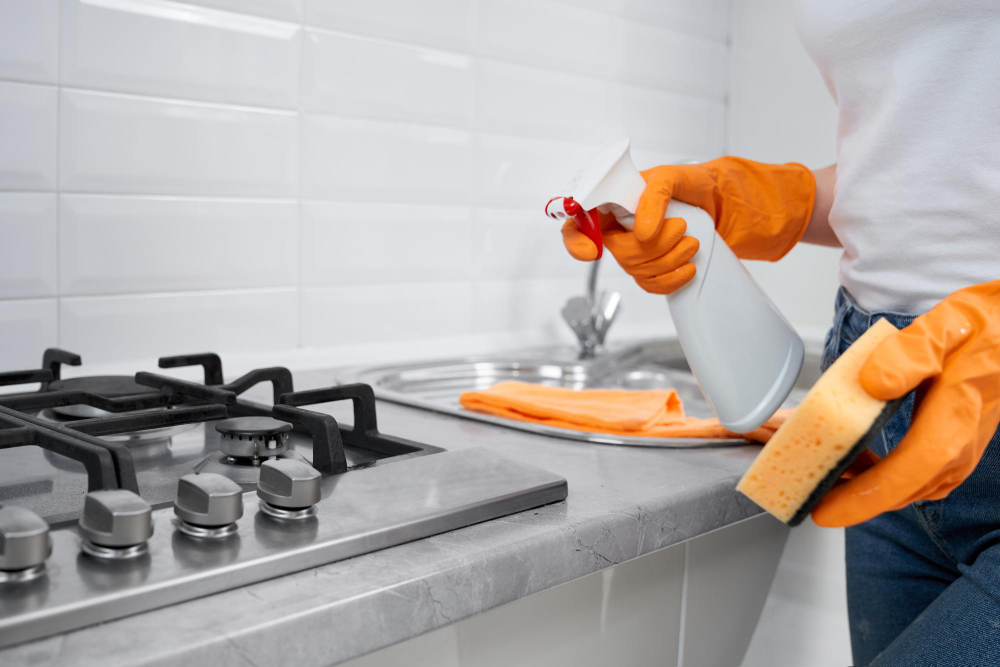
A messy kitchen feels overwhelming, but the real question is “How long does it take to clean a kitchen?” The answer depends on size, dirt level, and method. A quick wipe-down of counters and sink takes twenty minutes. A full scrub of cabinets, appliances, and floors needs two hours. Many homeowners turn to residential cleaning services for a faster, deeper result.
Factors That Affect the Time It Takes
The time required to clean a kitchen depends on several physical and environmental factors. Each home is different, which directly impacts overall cleaning duration.
- Room Size: Small kitchens can be cleaned quickly due to limited surface area and shorter reach distances. Larger kitchens with extended counters and open layouts require more movement and time. Compact spaces naturally allow faster access to all cleaning zones.
- Countertop Clutter: Items such as appliances, dishes, or mail slow down the process by blocking access to surfaces. Clearing counters first reduces cleaning time significantly. Open surfaces allow faster and more efficient wiping.
- Grease Levels: Light dust can be removed quickly, while heavy grease buildup requires stronger cleaning solutions and more scrubbing. Cooking oils often leave sticky layers on cabinets and vents that take longer to remove.
- Appliance Count: More appliances increase cleaning time since each unit requires separate attention. Items like microwaves, refrigerators, and air fryers all add steps to the process. Crumbs and residue around appliances also extend the cleaning duration.
- Floor Material: Smooth surfaces like sealed hardwood are quicker to clean than textured tile or grout-heavy flooring. Rough surfaces trap dirt, which increases the time required for proper cleaning.
- Tool Quality: High-quality cleaning tools improve efficiency and reduce effort. Fresh microfiber cloths and effective vacuums remove dirt faster compared to worn-out supplies. Better tools directly reduce “How long does it take to clean a kitchen?”
Common Mistakes That Slow Kitchen
Several small habits can significantly extend cleaning time if not managed properly. One of the most common mistakes is leaving dirty dishes in the sink, which interrupts workflow and creates additional mess.
Using old or worn-out sponges can also spread bacteria instead of removing grime effectively. This often leads to repeated cleaning of the same surfaces, increasing overall time. These inefficiencies directly affect “How long does it take to clean a kitchen?” when cleaning is done without proper preparation.
Tips for Efficient Kitchen Cleaning Processes
Efficient cleaning methods help reduce unnecessary effort and shorten total cleaning time. Structured routines make the process smoother and more organized.
- Top-Down Method: Dust naturally falls from higher surfaces onto lower areas during cleaning. Starting with ceiling fans, cabinets, and upper shelves prevents dirt from resettling on already cleaned counters. This approach creates a smoother workflow and reduces repeated effort.
- Soap Soak Time: Allowing the cleaning solution to sit on stovetops and greasy surfaces helps break down baked-on residue. This waiting period gives the chemicals time to soften stubborn buildup, reducing the need for aggressive scrubbing. While the solution works, attention can shift to other areas of the kitchen.
- Dry Wiping First: Removing loose debris, such as crumbs and dust, before introducing moisture prevents smearing and buildup. Dry wiping stops flour, grease, or particles from turning into sticky residue when mixed with water. This step also keeps cleaning cloths fresher for longer periods. It results in more efficient and effective surface cleaning overall.
- Grouped Tasks: Completing similar cleaning actions together improves efficiency and reduces unnecessary movement. Cleaning all glass surfaces in one pass or handling all countertops at once creates a more focused workflow. Staying with one task type helps maintain momentum and reduces time spent switching tools or products.
- Empty Dishwasher: Loading dishes directly into an empty dishwasher keeps counters clear and prevents sink pileups. This habit supports continuous cleaning instead of interrupting progress with clutter. A clear workspace allows faster movement between tasks and keeps the kitchen more organized throughout the process.
- Zone Focus: Dividing the kitchen into smaller sections makes the cleaning process more manageable and less overwhelming. Completing one zone, such as the sink area or stovetop section, before moving to the next helps maintain focus and structure. Progress feels more consistent, and each completed section builds momentum for the rest of the space.
Our crew performs deep house cleaning services in Denver, CO, to tackle the hardest spots. We scrub every hidden corner and baseboard with care. Follow these easy steps now.
Time-Saving Tips for Busy Kitchens
- Clean While Cooking: Washing bowls, utensils, or prep tools during cooking keeps the sink from piling up later. This approach leaves counters clear once the meal is finished and reduces the feeling of a large cleanup at the end of the day.
- Daily Fridge Check: Removing expired or unused food each day helps maintain an organized and fresh refrigerator. This prevents spills, odors, and unnecessary buildup inside the appliance. A quick surface wipe takes only seconds when shelves are kept relatively empty and maintained regularly.
- Paper Towel Use: Using paper towels for greasy or heavy spills prevents contamination of reusable cloths. Disposing of messes immediately helps keep other cleaning tools clean and ready for lighter tasks. This habit also prevents grease from spreading to other surfaces in the home.
- Trash Can Liners: Keeping extra liners at the bottom of the trash bin makes replacements faster and more convenient. Having supplies within reach eliminates unnecessary trips during cleaning. Small preparation habits like this help streamline the entire kitchen cleanup process.
- Microwave Steam: Heating a bowl of water inside the microwave creates steam that loosens stuck-on food and splatter. This makes wiping surfaces significantly easier and reduces the need for scrubbing. Heat does most of the work, leaving only a quick wipe to finish the job.
- Stove Liners: Protective liners placed on burner areas catch spills before they harden or stain surfaces. These liners can be removed and washed quickly in the sink. This helps maintain a cleaner stove with minimal scrubbing required over time.
When to Call Pros for Faster Kitchen Cleaning
Move-out situations often require a level of cleanliness that takes significant time and effort to achieve without professional help. Grease buildup, stained cabinets, and dusty vents can make the process much more demanding than expected. Professional cleaners use specialized tools and techniques that remove stubborn buildup far more efficiently than standard household cleaning methods.
Large gatherings and events can also leave behind extensive messes that are difficult to manage alone. Bringing in experienced cleaners allows homeowners to focus on recovery and rest while the kitchen is restored to a clean and functional state.
Reach out to Denver Cleaning Service Company for The Best Home Care Today
Our Denver Cleaning Service Company experts make every home shine without any stress for us. We love a fresh space and our crew brings a friendly smile to every single job.
While we handle big office buildings, our heart stays with our local home visits and residential work. DCSC offers the most reliable Denver house cleaning experts for your move-out needs or weekly scrubs. We charge a fair rate for the best results in the city.
Let us take the heavy chores off the list so life stays simple and fun.
Recent Comments